An AI that listens to what it made
An AI that cannot hear is guessing. Polaris hears the audio — not the MIDI, not the parameter values, the actual sound — and it listens to its own work before it ever shows it to you.
It hears the sound, not the numbers
Most tools that claim to check their output are reading the data that made it: the note list, the knob positions, the preset name. That tells you what was asked for. It cannot tell you what came out.
Polaris loads an audio model that listens to the rendered file. You can ask it a plain question — is the kick punchy, is the sub fighting the bass, does that drop actually hit — and it answers for the sound it heard.
And it measures
Hearing alone is an opinion. Polaris measures too: frequency balance band by band, loudness, stereo width and phase, tempo and groove.
So a verdict is never a shrug. When an agent says the low end is crowded, you can ask for the numbers behind that sentence and get them.
It auditions before it commits
This is where listening changes the work rather than just describing it.
- It sweeps. Ask for a sound and Polaris can render the same patch across a range of one control, listen to every version, and bring you the one that fits the brief.
- It plays the range. An instrument can be rendered across a span of notes, so a patch is judged where it will actually sit rather than on the single note it was designed on.
- It retries. When a generated sound misses the brief, Polaris hears that it missed and generates again rather than handing you the miss.
Sound from a sentence
Polaris also makes audio from words. Type dusty tape kick, short, no ring and it generates the sound — not a sample-library search, but audio made on your own GPU, on your own machine.
Then it listens to what it made and checks it against what you asked for. Kicks, subs, risers, impacts, textures. The generate-then-listen loop is the whole point: generating without hearing is a slot machine.
Nothing is hidden
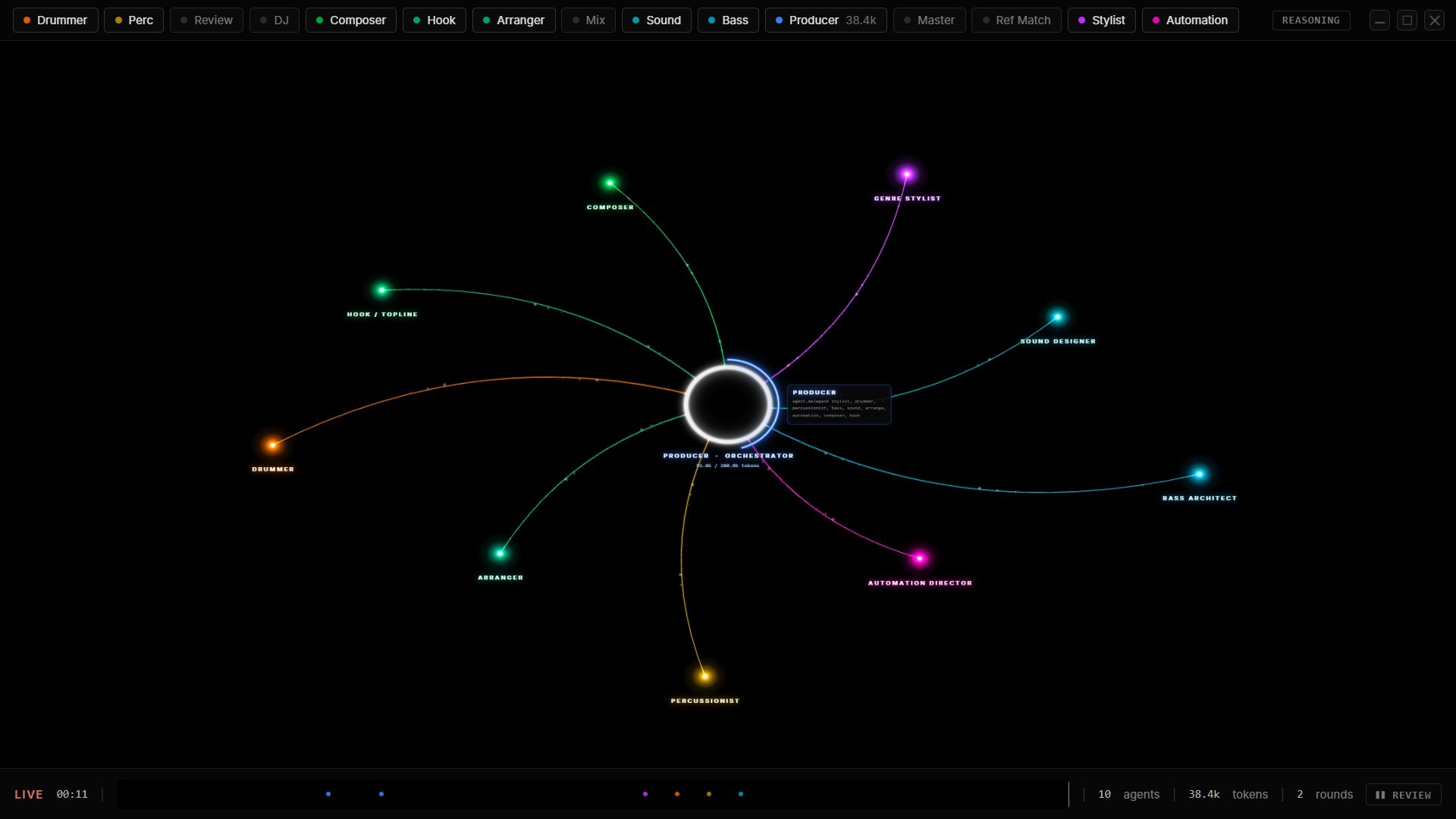
Every listen, every measurement and every verdict appears in the transcript and on the Constellation, attached to the agent that made it. Two agents can disagree about the same audio — and you see the disagreement, and the rule that settles it.
Read next
An AI that learns — how Polaris keeps what it discovers, with sources. Or the knowledge it ships with.